
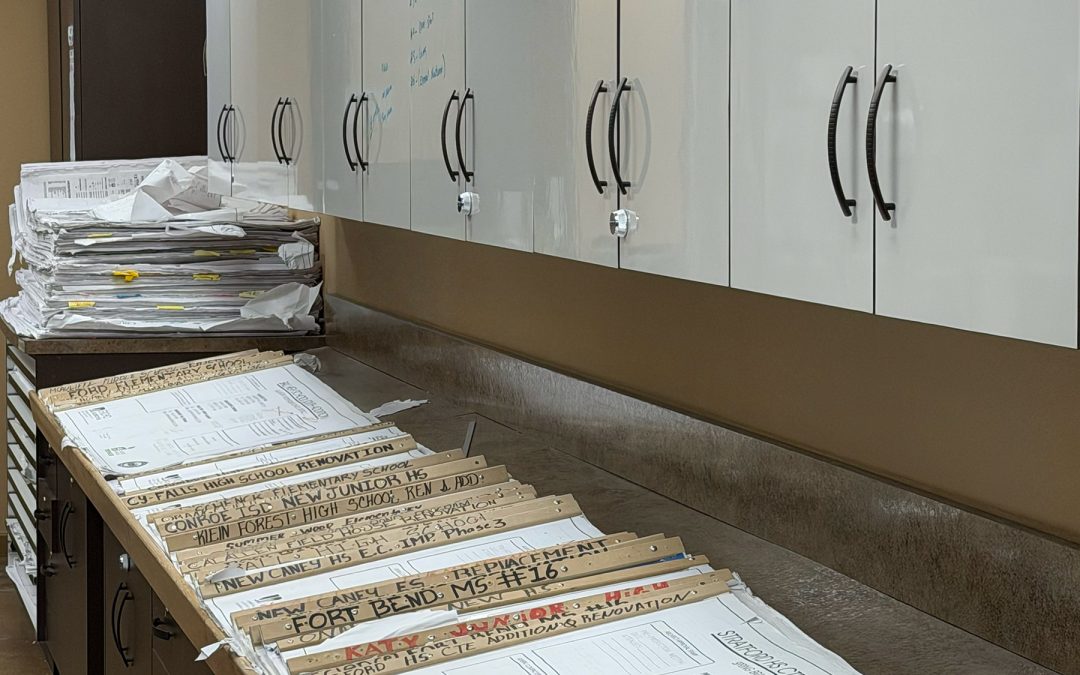
Lessons from the Field, Not the Drawing Set
Phased institutional projects rarely fail because of a single mistake. They break down slowly, through small coordination gaps that compound over time. Casework often sits right in the middle of that breakdown — not because it is uniquely problematic, but because it touches so many moving parts.
We see this most often on projects delivered across multiple phases, campuses, or years. At the outset, the intent is usually clear. The schedule makes sense. The standards are defined. But as phases roll forward, assumptions made early begin to drift from reality, and coordination becomes reactive rather than planned.
From the manufacturing side, the warning signs are familiar. A scope that was “locked” in Phase One quietly changes in Phase Three. A standard detail gets adjusted in the field but never formally captured. A schedule shifts slightly, compressing fabrication windows downstream. None of these issues feels critical in isolation. Together, they create friction.
As one of our project managers often says, “Phased projects don’t break all at once. They break one decision at a time.”
Institutional environments amplify this challenge. Campuses remain occupied. Budgets are allocated annually. Teams change over time. What begins as a well-coordinated program can lose alignment simply because continuity is hard to maintain across long timelines.
Casework is particularly sensitive to this drift because it relies on early decisions holding true later. Layouts, material selections, tolerances, and installation sequencing are all established well before fabrication begins. When those inputs shift — even subtly — the impact is felt quickly.
One common breakdown point occurs when standards evolve informally. A cabinet depth changes to accommodate a utility in one building. A finish substitution is approved to meet availability. A detail is modified in the field to solve a local issue. Unless those changes are captured and intentionally carried forward, later phases revert to outdated assumptions. The result is inconsistency, rework, or scope confusion.
Another frequent issue is schedule compression. Phased projects often absorb delays early under the assumption that later phases can “catch up.” Fabrication timelines rarely allow for that flexibility. When shop time is compressed, coordination must be nearly perfect to avoid disruption. If drawings are still resolving or details are unclear, the risk escalates quickly.
Occupied campuses add another layer of complexity. Access restrictions, limited install windows, and coordination with other trades all place additional pressure on sequencing. Casework installation becomes less about speed and more about precision. Without a clear, shared plan, even well-intentioned teams can find themselves working at cross purposes.
Industry research consistently reinforces this experience. Studies by organizations such as the Associated General Contractors of America highlight trade coordination and sequencing as leading contributors to schedule challenges on complex institutional work. In our experience, phased delivery simply magnifies those dynamics.
Preventing these breakdowns is less about adding process and more about maintaining alignment. The most successful phased projects we’ve supported share a few common traits. Standards are treated as living documents, formally updated and communicated as conditions change. Design-assist engagement continues beyond the first phase, rather than being treated as a one-time event. Fabrication and installation planning is revisited as each phase approaches, rather than assumed to be unchanged.
Perhaps most importantly, roles remain clear. When responsibility for coordination becomes diffused over time, decisions slow down and assumptions fill the gaps. When accountability is maintained, issues surface earlier and are easier to resolve.
At Jericho Woodworks, our approach to phased institutional projects is built around continuity. We focus on carrying lessons forward deliberately, aligning fabrication with evolving schedules, and coordinating installation sequencing in a way that respects both the site and the broader program. That structure helps teams avoid rediscovering the same problems phase after phase.
“Our goal is to make Phase Four feel easier than Phase One,” one of our operations leaders often notes. “That only happens when coordination improves over time, not erodes.”
For general contractors, architects, and institutional owners managing phased programs, the takeaway is straightforward. Phased projects succeed when coordination is treated as an ongoing responsibility, not an early milestone. Casework plays a central role in that effort, not because it creates problems, but because it reveals whether alignment has been maintained.
If you are planning or actively managing a phased institutional project and want to discuss how to improve coordination across phases, our team is available to support those conversations early and often.